回溯.md
46. 全排列
给定一个不含重复数字的数组 nums ,返回其 所有可能的全排列 。你可以 按任意顺序 返回答案。
示例 1:
输入:nums = [1,2,3]
输出:[[1,2,3],[1,3,2],[2,1,3],[2,3,1],[3,1,2],[3,2,1]]
示例 2:
输入:nums = [0,1]
输出:[[0,1],[1,0]]
示例 3:
输入:nums = [1]
输出:[[1]]
提示:
1 <= nums.length <= 6
-10 <= nums[i] <= 10
nums 中的所有整数 互不相同
经典回溯,
套用框架代码
1
2
3
4
5
6
7
8
9
10
11
12
13
14
15
16
17
18
19
20
21
22
23
24
25
26
27
| import java.util.ArrayList;
import java.util.List;
class Solution {
public List<List<Integer>> permute(int[] nums) {
permuteHelper(nums);
return result;
}
List<List<Integer>> result = new ArrayList<>();
List<Integer> path = new ArrayList<>();
private void permuteHelper(int[] nums) {
if (path.size() == nums.length) {
result.add(new ArrayList<>(path));
return;
}
for (int choice : nums) {
if (path.contains(choice)) {
continue;
}
path.add(choice);
permuteHelper(nums);
path.remove(path.size() - 1);
}
}
}
|
注意:
- 列表添加东西,除了基本数据类型比如int等,加入的都是引用(就是指针),因此添加要创建新的对象
- 时间复杂度O(n^2 * n!),空间复杂度O(n)。不对吧,节点数应该是O(n + n(n-1) + n(n-2) + ……+n!)等于O(n!),每个节点的需要O(1+2+3+……n)=O(n^2),因此最终是O(n^2*n!)
- 实际上可以优化。因为path.contains(choice)有一个O(n)的复杂度,使用一个布尔数组代表是否使用更好
1
2
3
4
5
6
7
8
9
10
11
12
13
14
15
16
17
18
19
20
21
22
23
24
25
26
27
28
29
30
31
| class Solution {
List<List<Integer>> result = new ArrayList<>();
List<Integer> path = new ArrayList<>();
boolean[] used ;
public List<List<Integer>> permute(int[] nums) {
used = new boolean[nums.length];
permuteHelper(nums);
return result;
}
private void permuteHelper(int[] nums) {
if (path.size() == nums.length) {
result.add(new ArrayList<>(path));
return;
}
for (int i = 0;i < nums.length ; i++) {
int choice = nums[i];
if (used[i]) {
continue;
}
path.add(choice);
used[i] = true;
permuteHelper(nums);
path.remove(path.size() - 1);
used[i] = false;
}
}
}
|
时间复杂度降到O(n*n!)
其他方法
- 原地交换法 (Swap-based Backtracking)(掌握)
- 定义一个递归函数
backtrack(index, nums),表示对 nums 数组从 index 位置开始进行全排列。
- 递归终止条件:当
index 等于数组长度时,说明已经生成了一个完整的排列,将其添加到结果列表中。
- 遍历与交换:在递归函数内部,从
index 到数组末尾进行遍历(用 i 表示)。将 index 位置的元素与 i 位置的元素进行交换。
- 递归深入:交换后,固定住
index 位置的元素,对 index + 1 之后的部分继续进行全排列,即调用 backtrack(index + 1, nums)。
- 回溯:在递归调用返回后,必须将之前交换的元素换回来,以恢复数组状态,确保不影响上一层的循环。这步是回溯的关键。
实际上就是直接借助原本输入数组来记录使用过的元素
1
2
3
4
5
6
7
8
9
10
11
12
13
14
15
16
17
18
19
20
21
22
23
24
25
26
27
28
29
| import java.util.*;
class Solution {
public List<List<Integer>> permute(int[] nums) {
List<List<Integer>> result = new ArrayList<>();
List<Integer> numsList = new ArrayList<>();
for (int num : nums) {
numsList.add(num);
}
permuteHelper(0, numsList, result);
return result;
}
private void permuteHelper(int index, List<Integer> numsList, List<List<Integer>> result) {
if (index == numsList.size()) {
result.add(new ArrayList<>(numsList));
return;
}
for (int i = index; i < numsList.size(); i++) {
Collections.swap(numsList, i, index);
permuteHelper(index + 1, numsList, result);
Collections.swap(numsList, i, index);
}
}
}
|
或者直接不用副本更减少空间复杂度
1
2
3
4
5
6
7
8
9
10
11
12
13
14
15
16
17
18
19
20
21
22
23
24
25
26
27
28
29
30
31
32
33
34
| import java.util.Arrays;
class Solution {
public List<List<Integer>> permute(int[] nums) {
List<List<Integer>> result = new ArrayList<>();
permuteHelper(0, nums, result);
return result;
}
private void permuteHelper(int index, int[] nums, List<List<Integer>> result) {
if (index == nums.length) {
List<Integer> permutation = new ArrayList<>();
for (int num : nums) {
permutation.add(num);
}
result.add(permutation);
return;
}
for (int i = index; i < nums.length; i++) {
swap(nums, i, index);
permuteHelper(index + 1, nums, result);
swap(nums, i, index);
}
}
private void swap(int[] nums, int i, int j) {
int temp = nums[i];
nums[i] = nums[j];
nums[j] = temp;
}
}
|
注意:
- 关于根据数组构造List:
- Collection要实现增删查遍历才算集合,因此数组不是集合,不能直接new ArrayList(Object[]),想要创建最好就是遍历。
- 关于Arrays.asList()
- 返回的List固定大小,不支持增删
- 返回的List是原数组的一个视图,对List的修改直接会修改原数组
- 基本对象数组无法被正确识别:方法签名是public static List asList(T… a),基本类型数组比如int[] a,int无法被看作一个对象无法当作泛型,因此会把int[]整体当作一个泛型,得到的是一个List<int[]>,如果一定要用直接使用包装类Intenger[] a
78.子集
https://leetcode.cn/problems/subsets/?envType=study-plan-v2&envId=top-100-liked
给你一个整数数组 nums ,数组中的元素 互不相同 。返回该数组所有可能的子集(幂集)。
解集 不能 包含重复的子集。你可以按 任意顺序 返回解集。
示例 1:
输入:nums = [1,2,3]
输出:[[],[1],[2],[1,2],[3],[1,3],[2,3],[1,2,3]]
示例 2:
输入:nums = [0]
输出:[[],[0]]
提示:
1 <= nums.length <= 10
-10 <= nums[i] <= 10
nums 中的所有元素 互不相同
- 考虑回溯
1
2
3
4
5
6
7
8
9
10
11
12
13
14
15
16
17
18
19
20
21
| import java.util.ArrayList;
import java.util.List;
class Solution {
List<Integer> path = new ArrayList<>();
public List<List<Integer>> subsets(int[] nums) {
List<List<Integer>> result = new ArrayList<>();
subsetsHelper(nums,0,result,path);
return result;
}
private void subsetsHelper(int[] nums,int start, List<List<Integer>> result,List<Integer> path) {
result.add(new ArrayList<>(path));
for (int i = start; i < nums.length; i++) {
path.add(nums[i]);
subsetsHelper(nums, i+1, result,path);
path.remove(path.size() - 1);
}
}
}
|
时间复杂度:一共2^n个子集,每个子集都要被复制一次O(l),(kC(n,k),k从0加到n),这个结果就是O(n2^n。可以分为子集平均长度是n/2,因为每个子集的相对于整个集合的补集也是整个集合的补集,和为n,可以划分成2^n/2个组合,每个组合长度是n,因此总长度n2^n/2,平均长度n/2
空间复杂度:path O(n),result O(2^n),栈O(n),不算结果最终是O(n)
- 迭代法
对于一个集合,例如 S = {1, 2, 3},它的所有子集可以被精确地分为两类:
- 不包含 最后一个元素
3 的子集。
- 包含 最后一个元素
3 的子集。
- 第一类:不包含
3 的子集,其实就是 {1, 2} 的所有子集。
- 第二类:包含
3 的子集,可以通过获取 {1, 2} 的所有子集,然后给每一个子集都添加上元素 3 来得到。
所以,如果我们知道了 P(n-1)(前 n-1 个元素的所有子集),我们就可以通过以下两步得到 P(n)(前 n 个元素的所有子集):
P(n) 包含 P(n-1) 的所有内容。P(n) 还包含 P(n-1) 中每个子集都加上第 n 个元素后形成的新子集。
步骤
- 初始化结果集
result,并首先放入一个空集 []。
- 遍历
nums 数组中的每一个数字 num。
- 对于
result 中已经存在的每一个子集,都创建一个新的子集,将 num 添加进去,然后将这个新子集也加入 result。
- 遍历完所有数字后,
result 就包含了所有可能的子集。
1
2
3
4
5
6
7
8
9
10
11
12
13
14
15
16
17
18
19
20
| import java.util.ArrayList;
import java.util.List;
class Solution {
public List<List<Integer>> subsets(int[] nums) {
List<List<Integer>> result = new ArrayList<>();
result.add(new ArrayList<>());
for (int num : nums) {
int currentSize = result.size();
for (int i = 0; i < currentSize; i++) {
List<Integer> newSub = new ArrayList<>(result.get(i));
newSub.add(num);
result.add(newSub);
}
}
return result;
}
}
|
时间还是O(n*2^n),空间O(n)
17.电话号码的字母组合
https://leetcode.cn/problems/letter-combinations-of-a-phone-number/description/?envType=study-plan-v2&envId=top-100-liked
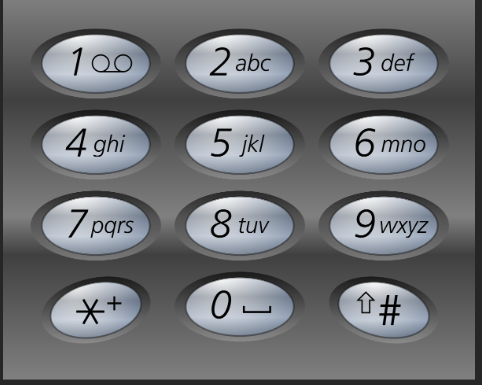
给定一个仅包含数字 2-9 的字符串,返回所有它能表示的字母组合。答案可以按 任意顺序 返回。
给出数字到字母的映射如下(与电话按键相同)。注意 1 不对应任何字母。

示例 1:
输入:digits = “23”
输出:[“ad”,”ae”,”af”,”bd”,”be”,”bf”,”cd”,”ce”,”cf”]
示例 2:
输入:digits = “”
输出:[]
示例 3:
输入:digits = “2”
输出:[“a”,”b”,”c”]
提示:
0 <= digits.length <= 4
digits[i] 是范围 [‘2’, ‘9’] 的一个数字。
思考:
先建立一个列表List<List>把映射关系存起来。然后分别遍历嵌套循环。
实际上很难嵌套循环,长度是可变的。可以回溯,如果到头了就撤销选择。
映射关系更好的是使用Map<Intenger,String>
空间复杂度是O(n),时间复杂度O(nk^n)(k是一个数字对应的字母数)(最差的话就是O(n4^n))
1
2
3
4
5
6
7
8
9
10
11
12
13
14
15
16
17
18
19
20
21
22
23
24
25
26
27
28
29
30
31
32
33
34
35
36
37
38
39
40
41
42
| import java.util.ArrayList;
import java.util.HashMap;
import java.util.List;
import java.util.Map;
class Solution {
public List<String> letterCombinations(String digits) {
Map<Character, String> map = new HashMap<>();
List<String> result = new ArrayList<>();
map.put('2', "abc");
map.put('3', "def");
map.put('4', "ghi");
map.put('5', "jkl");
map.put('6', "mno");
map.put('7', "pqrs");
map.put('8', "tuv");
map.put('9', "wxyz");
if (digits.isEmpty()){
return new ArrayList<>();
}
StringBuilder path = new StringBuilder();
backTrack(map,result,path,digits,0);
return result;
}
private void backTrack(Map<Character,String> map,List<String> result,StringBuilder path,String digits,int start){
if (path.length() == digits.length()){
result.add(new String(path));
return;
}
String thisLoopString = map.get(digits.charAt(start));
for (int j = 0; j < thisLoopString.length(); j++) {
char c = thisLoopString.charAt(j);
path.append(c);
backTrack(map,result,path,digits,start+1);
path.deleteCharAt(path.length()-1);
}
}
}
|
回溯实际上也是深度优先
下面可以用迭代广度优先
迭代
- 初始化:创建一个队列(
LinkedList 在 Java 中常被用作队列),并向其中添加一个空字符串 ""。这个空字符串是所有组合的起点。
- 遍历数字:遍历输入的数字字符串
digits 中的每一个数字。
- 逐层构建:对于每个数字,遍历当前队列中已有的所有部分组合。
- 从队列中取出一个部分组合。
- 获取当前数字对应的所有字母。
- 将取出的部分组合与每个字母拼接,形成新的、更长的组合。
- 将这些新组合放入队列的末尾。
- 完成:当遍历完所有数字后,队列中剩下的就是所有最终的完整组合。
1
2
3
4
5
6
7
8
9
10
11
12
13
14
15
16
17
18
19
20
21
22
23
24
25
26
27
28
29
30
31
32
33
34
35
36
37
38
39
| import java.util.ArrayList;
import java.util.LinkedList;
import java.util.Queue;
import java.util.Map;
class Solution {
public List<String> letterCombinations(String digits) {
Map<Character, String> map = new HashMap<>();
Queue<String> queue = new LinkedList<>();
map.put('2', "abc");
map.put('3', "def");
map.put('4', "ghi");
map.put('5', "jkl");
map.put('6', "mno");
map.put('7', "pqrs");
map.put('8', "tuv");
map.put('9', "wxyz");
if (digits.isEmpty()) {
return new ArrayList<>();
}
queue.offer("");
for (int i = 0; i < digits.length(); i++) {
String thisLoopString = map.get(digits.charAt(i));
int thisQueueNum = queue.size();
for (int j = 0; j < thisQueueNum; j++) {
String newStringToEdit = queue.poll();
for (int k = 0; k < thisLoopString.length(); k++) {
String newString = newStringToEdit + thisLoopString.charAt(k);
queue.offer(newString);
}
}
}
return new ArrayList<>(queue);
}
}
|
复杂度:
时间:一共k^n中情况,每种情况需要创建一个新的字符串长度为n,因此是O(n*k^n)
空间:O(n*4^n)
39.组合总和
https://leetcode.cn/problems/combination-sum/description/?envType=study-plan-v2&envId=top-100-liked
给你一个 无重复元素 的整数数组 candidates 和一个目标整数 target ,找出 candidates 中可以使数字和为目标数 target 的 所有 不同组合 ,并以列表形式返回。你可以按 任意顺序 返回这些组合。
candidates 中的 同一个 数字可以 无限制重复被选取 。如果至少一个数字的被选数量不同,则两种组合是不同的。
对于给定的输入,保证和为 target 的不同组合数少于 150 个。
示例 1:
输入:candidates = [2,3,6,7], target = 7
输出:[[2,2,3],[7]]
解释:
2 和 3 可以形成一组候选,2 + 2 + 3 = 7 。注意 2 可以使用多次。
7 也是一个候选, 7 = 7 。
仅有这两种组合。
示例 2:
输入: candidates = [2,3,5], target = 8
输出: [[2,2,2,2],[2,3,3],[3,5]]
示例 3:
输入: candidates = [2], target = 1
输出: []
提示:
1 <= candidates.length <= 30
2 <= candidates[i] <= 40
candidates 的所有元素 互不相同
1 <= target <= 40
考虑回溯
1
2
3
4
5
6
7
8
9
10
11
12
13
14
15
16
17
18
19
20
21
22
23
24
25
26
27
28
29
30
31
| import java.util.ArrayList;
import java.util.Arrays;
import java.util.List;
class Solution {
public List<List<Integer>> combinationSum(int[] candidates, int target) {
List<List<Integer>> result = new ArrayList<>();
List<Integer> path = new ArrayList<>();
Arrays.sort(candidates);
backTrace(result,path,candidates,target,0);
return result;
}
private void backTrace(List<List<Integer>> result, List<Integer> path, int[] candidates, int sumNowNeed,int start) {
if (sumNowNeed == 0) {
result.add(new ArrayList<>(path));
return;
}
for (int i = start; i < candidates.length; i++) {
sumNowNeed = sumNowNeed - candidates[i];
if (sumNowNeed<0){
sumNowNeed = sumNowNeed + candidates[i];
return;
}
path.add(candidates[i]);
backTrace(result, path, candidates, sumNowNeed, i);
path.remove(path.size()-1);
sumNowNeed += candidates[i];
}
}
}
|
时间复杂度:不考虑剪枝的情况,递归树最大高度是target/min_val记为D,第一次有n个选择,第二层每个节点也是n个选择,因此整个树节点数目是O(n^(target/min)),非叶节点操作是O(1),叶节点操作是O(D),叶节点数目是S(解的数目),因此最终是O(N^D+s*D)
空间复杂度:递归调用栈是和path都是O(D)
22.括号生成
https://leetcode.cn/problems/generate-parentheses/description/?envType=study-plan-v2&envId=top-100-liked
数字 n 代表生成括号的对数,请你设计一个函数,用于能够生成所有可能的并且 有效的 括号组合。
示例 1:
输入:n = 3
输出:[“((()))”,”(()())”,”(())()”,”()(())”,”()()()”]
示例 2:
输入:n = 1
输出:[“()”]
提示:
1 <= n <= 8
如果使用回溯,一共n对括号,意味着左括号右括号各有n个。同时要确保,任何时候left的数目要大于等于right,否则剪枝;同时左括号数目不能大于n,否则剪枝。当path的长度为2n记录结果返回。
1
2
3
4
5
6
7
8
9
10
11
12
13
14
15
16
17
18
19
20
21
22
23
24
25
26
27
28
29
30
31
32
33
34
35
36
37
38
39
| import java.util.ArrayList;
import java.util.List;
class Solution {
public List<String> generateParenthesis(int n) {
StringBuilder path = new StringBuilder();
List<String> result = new ArrayList<>();
char[] candidates = new char[] {'(',')'};
backTrace(result,path,n,candidates,0,0);
return result;
}
private void backTrace(List<String> result,StringBuilder path,int n,char[] candidates,int left_num,int right_num){
if (path.length() == 2*n){
result.add(new String(path));
return;
}
for (char charChosed : candidates) {
if (charChosed == '('){
left_num++;
}else {
right_num++;
}
if (left_num >= right_num && left_num <= n && right_num <= n) {
path.append(charChosed);
backTrace(result, path, n, candidates, left_num, right_num);
path.deleteCharAt(path.length() - 1);
}
if (charChosed == '(') {
left_num--;
} else {
right_num--;
}
}
}
}
|
时间复杂度:不考虑剪枝:4^n*n;考虑剪枝这是个卡特兰数,( 4^n / n^(3/2) ) * n
空间复杂度:调用栈和path都是O(n),不考虑结果就是O(N)
- 动态规划法
任意一个有效括号开头必定是 “(“,因此必定对应一个”)”.
因此任意一个有效组合可以分为如下结构:
(A)B,A和B都要是有效括号,并且A和B 的括号对数和要是n-1.
设A有i对,则B有n-1-i对
记i为状态,dp[i]为i对括号的所有可能组合。
dp[i] = (dp[j])dp[i-1-j],j从0遍历到i-1
边界条件dp[0] = {“”}
1
2
3
4
5
6
7
8
9
10
11
12
13
14
15
16
17
18
19
20
21
22
23
24
25
26
| import java.util.ArrayList;
import java.util.List;
class Solution {
public List<String> generateParenthesis(int n) {
List<List<String>> dp = new ArrayList<>();
List<String> dp0 = new ArrayList<>();
dp0.add("");
dp.add(dp0);
for (int i = 1; i <= n; i++) {
List<String> dp_i = new ArrayList<>();
for (int j = 0; j < i; j++) {
List<String> dp_j = dp.get(j);
List<String> dp_i_1_j = dp.get(i-1-j);
for (String stringA : dp_j) {
for (String stringB : dp_i_1_j) {
dp_i.add("("+stringA+")"+stringB);
}
}
}
dp.add(dp_i);
}
return dp.get(n);
}
}
|
79.单词搜索
https://leetcode.cn/problems/word-search/description/?envType=study-plan-v2&envId=top-100-liked
给定一个 m x n 二维字符网格 board 和一个字符串单词 word 。如果 word 存在于网格中,返回 true ;否则,返回 false 。
单词必须按照字母顺序,通过相邻的单元格内的字母构成,其中“相邻”单元格是那些水平相邻或垂直相邻的单元格。同一个单元格内的字母不允许被重复使用。
示例 1:
输入:board = [[‘A’,’B’,’C’,’E’],[‘S’,’F’,’C’,’S’],[‘A’,’D’,’E’,’E’]], word = “ABCCED”
输出:true
示例 2:
输入:board = [[‘A’,’B’,’C’,’E’],[‘S’,’F’,’C’,’S’],[‘A’,’D’,’E’,’E’]], word = “SEE”
输出:true
示例 3:
输入:board = [[‘A’,’B’,’C’,’E’],[‘S’,’F’,’C’,’S’],[‘A’,’D’,’E’,’E’]], word = “ABCB”
输出:false
提示:
m == board.length
n = board[i].length
1 <= m, n <= 6
1 <= word.length <= 15
board 和 word 仅由大小写英文字母组成
进阶:你可以使用搜索剪枝的技术来优化解决方案,使其在 board 更大的情况下可以更快解决问题?
考虑回溯
path记录,只要path和word相等,exitWord改为true并返回。尝试的选择可以先遍历一个字符串数组up、down、left、right依次选择向哪里走,如果索引越界则撤销选择。(索引不能越界)
path长度要小于word
path对应的字母要和word相同
1
2
3
4
5
6
7
8
9
10
11
12
13
14
15
16
17
18
19
20
21
22
23
24
25
26
27
28
29
30
31
32
33
34
35
36
37
38
| class Solution {
public boolean exist(char[][] board, String word) {
int[][] direction = new int[][]{{0,1},{0,-1},{1,0},{-1,0}};
for (int i = 0; i < board.length; i++) {
for (int j = 0; j < board[0].length; j++) {
boolean[][] used = new boolean[board.length][board[0].length];
StringBuilder path = new StringBuilder();
path.append(board[i][j]);
used[i][j] = true;
backTrace(board,word,path,direction,new int[]{i,j},used);
if (exitWord == true){
return exitWord;
}
}
}
return exitWord;
}
private boolean exitWord = false;
private void backTrace(char[][] board,String word,StringBuilder path,int[][] direction,int[] start,boolean [][] used){
if (path.toString().equals(word)){
exitWord = true;
return;
}
for (int[] direct : direction) {
start[0] += direct[0];
start[1] += direct[1];
if (start[0] < board.length && start[0] >= 0 && start[1] >= 0 && start[1] < board[0].length && path.length() < word.length() && !used[start[0]][start[1]] && board[start[0]][start[1]] == word.charAt(path.length())){
used[start[0]][start[1]] = true;
path.append(board[start[0]][start[1]]);
backTrace(board,word,path,direction,start,used);
path.deleteCharAt(path.length()-1);
used[start[0]][start[1]] = false;
}
start[0] -= direct[0];
start[1] -= direct[1];
}
}
}
|
上面是正确的,但是代码写的很乱。下面是优化
- 直接返回true或者false
- 不用path,直接传入k表示正在寻找word第k个字符
- 可以在回溯中直接创建新的行列坐标,不用手动再次恢复了
1
2
3
4
5
6
7
8
9
10
11
12
13
14
15
16
17
18
19
20
21
22
23
24
25
26
27
28
29
30
31
32
33
34
35
36
37
38
39
40
41
| class Solution {
public boolean exist(char[][] board, String word) {
int m = board.length;
int n = board[0].length;
int[][] direction = new int[][]{{0,1},{0,-1},{1,0},{-1,0}};
boolean[][] visited = new boolean[m][n];
for (int i = 0; i < m; i++) {
for (int j = 0; j < n; j++) {
if(backTrace(board,word,0,i,j,visited,direction)){
return true;
}
}
}
return false;
}
private boolean backTrace(char[][] board,String word,int k ,int row,int col,boolean[][] visted,int[][] direction){
if (board[row][col] != word.charAt(k)){
return false;
}
if (k == word.length()-1 && board[row][col] == word.charAt(k)){
return true;
}
visted[row][col] = true;
for (int[] dir : direction) {
int newRow = row + dir[0];
int newCol = col + dir[1];
if (newRow >= 0 && newRow < board.length && newCol>=0 &&newCol < board[0].length && !visted[newRow][newCol]){
if (backTrace(board,word,k+1,newRow,newCol,visted,direction)){
return true;
}
}
}
visted[row][col] = false;
return false;
}
}
|
131.分割回文字符
https://leetcode.cn/problems/palindrome-partitioning/description/?envType=study-plan-v2&envId=top-100-liked
给你一个字符串 s,请你将 s 分割成一些 子串,使每个子串都是 回文串 。返回 s 所有可能的分割方案。
示例 1:
输入:s = “aab”
输出:[[“a”,”a”,”b”],[“aa”,”b”]]
示例 2:
输入:s = “a”
输出:[[“a”]]
提示:
1 <= s.length <= 16
s 仅由小写英文字母组成
可以回溯
回文字符串的判断,可以双指针,从中间开始向两侧移动,每个字符都相等就是回文,O(n)的成本
剪枝:不好减
1
2
3
4
5
6
7
8
9
10
11
12
13
14
15
16
17
18
19
20
21
22
23
24
25
26
27
28
29
30
31
32
33
34
35
36
37
| import java.util.ArrayList;
import java.util.List;
class Solution {
public List<List<String>> partition(String s) {
List<List<String>> result = new ArrayList<>();
List<String> path = new ArrayList<>();
backTrace(result,path,0,s);
return result;
}
private void backTrace(List<List<String>> result,List<String> path,int start,String s){
if (start == s.length()){
result.add(new ArrayList<>(path));
return;
}
for (int i = start + 1; i <= s.length(); i++) {
String newSub = s.substring(start,i);
if (isPalindrome(newSub)){
path.add(newSub);
backTrace(result,path,i,s);
path.remove(path.size()-1);
}
}
}
private boolean isPalindrome(String s){
int left = 0;
int right = s.length()-1;
while (left < right){
if (s.charAt(left) != s.charAt(right)){
return false;
}
left++;
right--;
}
return true;
}
}
|
实际上来说,中间可能遇到很多重复判断。[i,j)的子串可能会多次判断,耗费O(k),可以使用二维数组把遇到的结果存起来,记忆化搜索
考虑引入一个数组memo[start][end],代表[start,end]子串,值为0意味着未计算,值为1意味着是回文,值为2意味着不是回文
1
2
3
4
5
6
7
8
9
10
11
12
13
14
15
16
17
18
19
20
21
22
23
24
25
26
27
28
29
30
31
32
33
34
35
36
37
38
39
40
41
42
| class Solution {
public List<List<String>> partition(String s) {
List<List<String>> result = new ArrayList<>();
List<String> path = new ArrayList<>();
int[][] memo = new int[s.length()][s.length()];
backTrace(result,path,0,s,memo);
return result;
}
private void backTrace(List<List<String>> result,List<String> path,int start,String s,int[][] memo){
if (start == s.length()){
result.add(new ArrayList<>(path));
return;
}
for (int i = start + 1; i <= s.length(); i++) {
if (isPalindrome(s,start,i-1,memo) == 1){
String newSub = s.substring(start,i);
path.add(newSub);
backTrace(result,path,i,s,memo);
path.remove(path.size()-1);
}
}
}
private int isPalindrome(String s, int left, int right, int[][] memo){
if (memo[left][right] != 0) {
return memo[left][right];
}
int i = left;
int j = right;
while (i < j) {
if (s.charAt(i) != s.charAt(j)) {
memo[left][right] = 2;
return 2;
}
i++;
j--;
}
memo[left][right] = 1;
return 1;
}
}
|
时间复杂度:O(n*2^n).最坏情况任何一种划分都符合要求。一共有2^(n-1)个划分方案(两个数中间的空位可以划一刀或者不划一刀),复制花费O(n),每种 方案每个子串都要判断是否是回文,耗费复杂度O(n)
空间复杂度:O(n^2),调用栈最深是O(n),记忆数组O(n^2)
- 可以先dp动态规划预处理
可以直接构建dp[start][end]表代表[start,end]是否为回文(为了方便我们首位都取)
dp[i][j]为回文,显然需要首尾字符相同,并且除了首位外的字符串是个回文。
因此,dp[i][j] = (char[i]==char[j])&&(dp[i+1][j-1])
我们只需要填j>=i的部分
也就是主对角线及其上方
边界条件:i==j,true.
注意递推的步长是2,每次i-j都减小2,因此部分无法递推到i==j
第二个边界条件:
i-j == 1,此时真假就是char[i] == char[j]
填充顺序从左到右,从下到 上
1
2
3
4
5
6
7
8
9
10
11
12
13
14
15
16
17
18
19
20
21
22
23
24
25
26
27
28
29
30
31
32
33
34
35
| class Solution {
public List<List<String>> partition(String s) {
List<List<String>> result = new ArrayList<>();
List<String> path = new ArrayList<>();
boolean[][] dp = new boolean[s.length()][s.length()];
for (int i = s.length()-1; i >= 0 ; i--) {
dp[i][i] = true;
}
for (int i = 0; i <= s.length() - 2; i++) {
dp[i][i+1] = s.charAt(i)==s.charAt(i+1);
}
for (int i = s.length()-1; i >= 0 ; i--) {
for (int j = i+2; j < s.length(); j++) {
dp[i][j] = (s.charAt(i)==s.charAt(j))&&(dp[i+1][j-1]);
}
}
backTrace(result,path,0,s,dp);
return result;
}
private void backTrace(List<List<String>> result,List<String> path,int start,String s,boolean[][] dp){
if (start == s.length()){
result.add(new ArrayList<>(path));
return;
}
for (int i = start + 1; i <= s.length(); i++) {
String newSub = s.substring(start,i);
if (dp[start][i-1]){
path.add(newSub);
backTrace(result,path,i,s,dp);
path.remove(path.size()-1);
}
}
}
}
|
时间复杂度同上
空间复杂度同上
51.N皇后
https://leetcode.cn/problems/n-queens/description/?envType=study-plan-v2&envId=top-100-liked
按照国际象棋的规则,皇后可以攻击与之处在同一行或同一列或同一斜线上的棋子。
n 皇后问题 研究的是如何将 n 个皇后放置在 n×n 的棋盘上,并且使皇后彼此之间不能相互攻击。
给你一个整数 n ,返回所有不同的 n 皇后问题 的解决方案。
每一种解法包含一个不同的 n 皇后问题 的棋子放置方案,该方案中 ‘Q’ 和 ‘.’ 分别代表了皇后和空位。

示例 1:
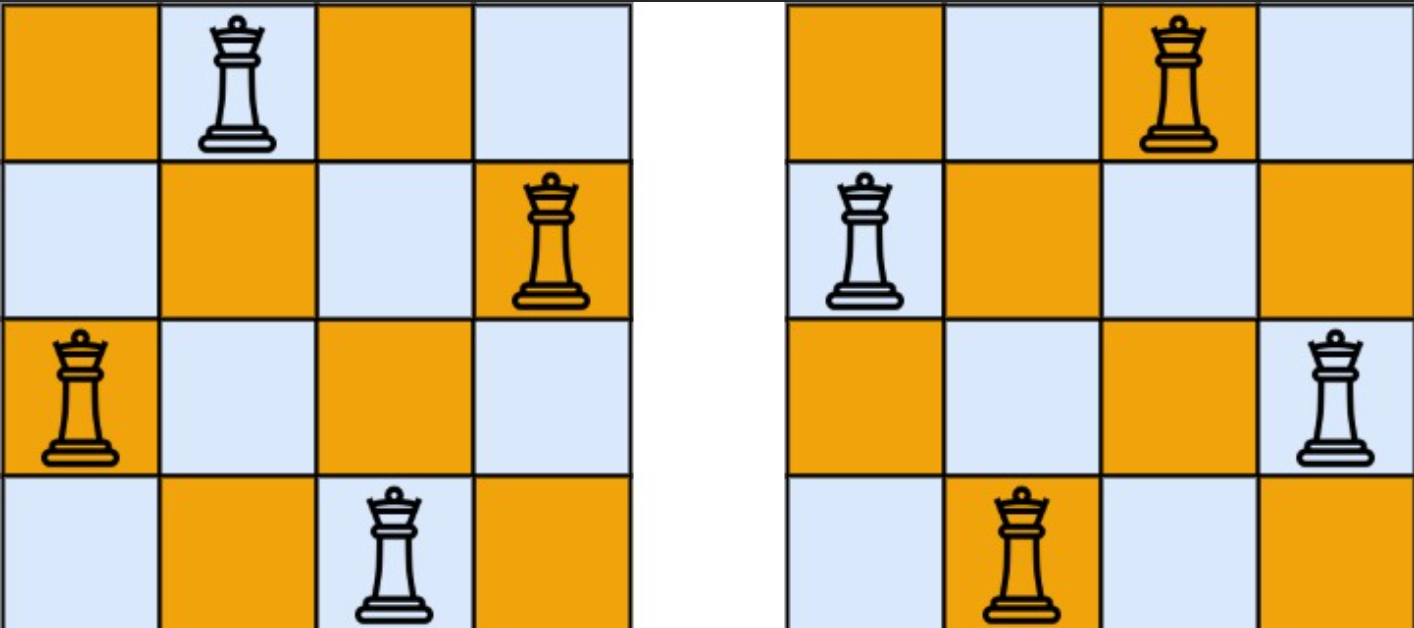
输入:n = 4
输出:[[“.Q..”,”…Q”,”Q…”,”..Q.”],[“..Q.”,”Q…”,”…Q”,”.Q..”]]
解释:如上图所示,4 皇后问题存在两个不同的解法。
示例 2:
输入:n = 1
输出:[[“Q”]]
提示:
1 <= n <= 9
每一行只能放一个皇后
每行的防止位置要保障列、两条斜线线处没有皇后(剪枝条件)
主斜线线:row - col = c;副斜线:row + col = c;
1
2
3
4
5
6
7
8
9
10
11
12
13
14
15
16
17
18
19
20
21
22
23
24
25
26
27
28
29
30
31
32
33
34
35
36
37
38
39
40
41
42
43
44
45
46
47
48
49
50
51
52
53
54
55
56
57
58
59
60
61
62
63
64
65
66
67
68
69
70
71
72
73
| import java.util.ArrayList;
import java.util.List;
class Solution {
public List<List<String>> solveNQueens(int n) {
List<List<String>> result = new ArrayList<>();
List<String> plan = new ArrayList<>();
backTrace(result,plan,n,0);
return result;
}
private void backTrace(List<List<String>> result, List<String> plan, int n,int row) {
if (plan.size() == n) {
result.add(new ArrayList<>(plan));
return;
}
for (int i = 0; i < n; i++) {
StringBuilder thisRow = new StringBuilder();
for (int j = 0; j < n; j++) {
if (j==i){
thisRow.append('Q');
}
else {
thisRow.append('.');
}
}
plan.add(new String(thisRow));
if (!thisColTwoQ(plan,i,row,n) && !thisFirstSlashTwoQ(plan,i,row,n) && !thisSecondSlashTwoQ(plan,i,row,n)){
backTrace(result,plan,n,row+1);
}
plan.remove(plan.size()-1);
}
}
private boolean thisColTwoQ(List<String> plan,int col,int row,int n){
for (int i = row - 1; i >= 0 ; i--) {
String s = plan.get(i);
if (s.charAt(col) == 'Q'){
return true;
}
}
return false;
}
private boolean thisFirstSlashTwoQ(List<String> plan,int col,int row,int n){
int c = row - col;
for (int i = row - 1; i >= 0 ; i--) {
int j = i - c;
if (j < 0 || j > n-1){
break;
}
String s = plan.get(i);
if (s.charAt(j) == 'Q'){
return true;
}
}
return false;
}
private boolean thisSecondSlashTwoQ(List<String> plan, int col, int row ,int n){
int c = row + col;
for (int i = row - 1; i >= 0 ; i--) {
int j = c - i;
if (j < 0 || j > n - 1){
break;
}
String s = plan.get(i);
if (s.charAt(j) == 'Q'){
return true;
}
}
return false;
}
}
|
上面的解法是正确的
但是剪枝的逻辑可以进一步优化。
目前的剪枝调用多个函数,每个函数都要再次遍历一次之前已有的所有行
可以直接使用三个布尔数组来记录对应的行、对角线是否已经有Q
1
2
3
4
5
6
7
8
9
10
11
12
13
14
15
16
17
18
19
20
21
22
23
24
25
26
27
28
29
30
31
32
33
34
35
36
37
38
39
40
41
42
43
44
45
46
47
| import java.util.*;
class Solution {
public List<List<String>> solveNQueens(int n) {
List<List<String>> result = new ArrayList<>();
List<String> plan = new ArrayList<>();
boolean[] col = new boolean[n];
boolean[] diag1 = new boolean[2*n];
boolean[] diag2 = new boolean[2 * n];
backTrace(result,plan,n,0,col,diag1,diag2);
return result;
}
private void backTrace(List<List<String>> result, List<String> plan, int n,int row,boolean[] col,boolean[] diagonals1,boolean[] diagonals2) {
if (plan.size() == n) {
result.add(new ArrayList<>(plan));
return;
}
for (int i = 0; i < n; i++) {
if (!col[i] && !diagonals1[row-i+n-1] && !diagonals2[row+i]){
StringBuilder thisRow = new StringBuilder();
for (int j = 0; j < n; j++) {
if (j==i){
thisRow.append('Q');
}
else {
thisRow.append('.');
}
}
col[i] = true;
diagonals1[row - i + n - 1] = true;
diagonals2[row + i] = true;
plan.add(new String(thisRow));
backTrace(result,plan,n,row+1,col,diagonals1,diagonals2);
plan.remove(plan.size()-1);
col[i] = false;
diagonals1[row - i + n - 1] = false;
diagonals2[row + i] = false;
}
}
}
}
|
空间复杂度:布尔数组都是O(n),调用栈O(n),总共O(n)
时间复杂度:
递归树节点:第一行N,第二行N-1等等(不考虑剪枝),因此一共O(N!)个节点,每个节点本地操作O(N),对于叶节点S(N),有O(N^2)的复制,所以总的是O(N!*N+S(N)*N^2)
下面是官方解答
1
2
3
4
5
6
7
8
9
10
11
12
13
14
15
16
17
18
19
20
21
22
23
24
25
26
27
28
29
30
31
32
33
34
35
36
37
38
39
40
41
42
43
44
45
46
47
48
49
50
51
52
53
54
| class Solution {
public List<List<String>> solveNQueens(int n) {
List<List<String>> solutions = new ArrayList<List<String>>();
int[] queens = new int[n];
Arrays.fill(queens, -1);
Set<Integer> columns = new HashSet<Integer>();
Set<Integer> diagonals1 = new HashSet<Integer>();
Set<Integer> diagonals2 = new HashSet<Integer>();
backtrack(solutions, queens, n, 0, columns, diagonals1, diagonals2);
return solutions;
}
public void backtrack(List<List<String>> solutions, int[] queens, int n, int row, Set<Integer> columns, Set<Integer> diagonals1, Set<Integer> diagonals2) {
if (row == n) {
List<String> board = generateBoard(queens, n);
solutions.add(board);
} else {
for (int i = 0; i < n; i++) {
if (columns.contains(i)) {
continue;
}
int diagonal1 = row - i;
if (diagonals1.contains(diagonal1)) {
continue;
}
int diagonal2 = row + i;
if (diagonals2.contains(diagonal2)) {
continue;
}
queens[row] = i;
columns.add(i);
diagonals1.add(diagonal1);
diagonals2.add(diagonal2);
backtrack(solutions, queens, n, row + 1, columns, diagonals1, diagonals2);
queens[row] = -1;
columns.remove(i);
diagonals1.remove(diagonal1);
diagonals2.remove(diagonal2);
}
}
}
public List<String> generateBoard(int[] queens, int n) {
List<String> board = new ArrayList<String>();
for (int i = 0; i < n; i++) {
char[] row = new char[n];
Arrays.fill(row, '.');
row[queens[i]] = 'Q';
board.add(new String(row));
}
return board;
}
}
|
主要不同在于:
- 使用Set来记录重复,天然支持负数索引
- 使用int[] queens,queens[row]=col,找到答案后一次性生成棋盘
还可以进一步优化
使用位运算状态压缩
1
2
3
4
5
6
7
8
9
10
11
12
13
14
15
16
17
18
19
20
21
22
23
24
25
26
27
28
29
30
31
32
33
34
35
36
37
38
| class Solution {
public List<List<String>> solveNQueens(int n) {
int[] queens = new int[n];
Arrays.fill(queens, -1);
List<List<String>> solutions = new ArrayList<List<String>>();
solve(solutions, queens, n, 0, 0, 0, 0);
return solutions;
}
public void solve(List<List<String>> solutions, int[] queens, int n, int row, int columns, int diagonals1, int diagonals2) {
if (row == n) {
List<String> board = generateBoard(queens, n);
solutions.add(board);
} else {
int availablePositions = ((1 << n) - 1) & (~(columns | diagonals1 | diagonals2));
while (availablePositions != 0) {
int position = availablePositions & (-availablePositions);
availablePositions = availablePositions & (availablePositions - 1);
int column = Integer.bitCount(position - 1);
queens[row] = column;
solve(solutions, queens, n, row + 1, columns | position, (diagonals1 | position) << 1, (diagonals2 | position) >> 1);
queens[row] = -1;
}
}
}
public List<String> generateBoard(int[] queens, int n) {
List<String> board = new ArrayList<String>();
for (int i = 0; i < n; i++) {
char[] row = new char[n];
Arrays.fill(row, '.');
row[queens[i]] = 'Q';
board.add(new String(row));
}
return board;
}
}
|
知识补充:
- 补码:目前计算机的有符号整数一般都是使用补码表示的。它是为了处理两个相反数之和应当为0,并且0只能有一个表示。这样可以节省计算机资源。最高位是符号位,0表示0或者正数。正数补码是自己,负数补码是,负数的绝对值按位取反后+1
关于上面代码的一些解释
第1步: availablePositions = ((1 << n) - 1) & (~(columns | diagonals1 | diagonals2));
这行代码在寻找当前行所有安全的列。我们把它拆成三小步:
第3步: position = availablePositions & (-availablePositions); (lowbit技巧)
这是一个非常经典的位运算技巧,叫做 lowbit。它的作用是只保留一个数最右边的那个 1,其余位都清零。
- 例:
availablePositions 是 01011000。
-availablePositions 在计算机中是用补码表示的,等于 ~availablePositions + 1,结果是 10101000。01011000 & 10101000 的结果是 00001000。- 看,我们成功地分离出了最右边的一个可放置位置!
position 现在就代表了我们这次要尝试放置皇后的那个点。
第4步: availablePositions = availablePositions & (availablePositions - 1);
这也是一个经典技巧,作用是消除一个数最右边的那个 1。
- 例:
availablePositions 是 01011000。
availablePositions - 1 是 01010111。01011000 & 01010111 的结果是 01010000。- 最右边的
1 被干掉了!这样,在下一次 while 循环中,lowbit 技巧就会抓到下一个可用的位置(现在最右边的那个 1)。
通过第3步和第4步的配合,这个 while 循环可以不重不漏地、高效地遍历所有可放置皇后的位置,而不需要一个 for 循环从头到尾检查。
第5步: int column = Integer.bitCount(position - 1);
现在我们有了 position,比如 00001000 (十进制是8),但我们需要的是列的索引号,也就是 3。怎么转换?
position 永远是2的幂,只有一个位是 1。position - 1 会得到一个低位全是 1 的数。例如 8 - 1 = 7,二进制是 00000111。Integer.bitCount() 方法会计算一个数有多少个 1。00000111 中有3个 1。- 这个
1 的数量,正好就是我们想要的列索引!